Showing posts with label Fungi. Show all posts

Saturday, August 12, 2017

Beautiful Day at Charleston Falls, August 12, 2017

Come with Jeanne and me on the walk we took at Charleston Falls this morning.  The day was perfect...sweater weather and sunny.

Black-eyed Susans

And the smaller Brown-eyed Susans

Ironweed

Spiderwebs sparkling with dew in the sunshine

Not sure what this plant is.  I plan to take more photos and post them to the Ohio Wildflowers and Flora Facebook page.  I discovered when I started searching my field guides that I hadn't looked at the plant as closely as I needed to for ID purposes.  The little black row of "buttons" fascinated me.

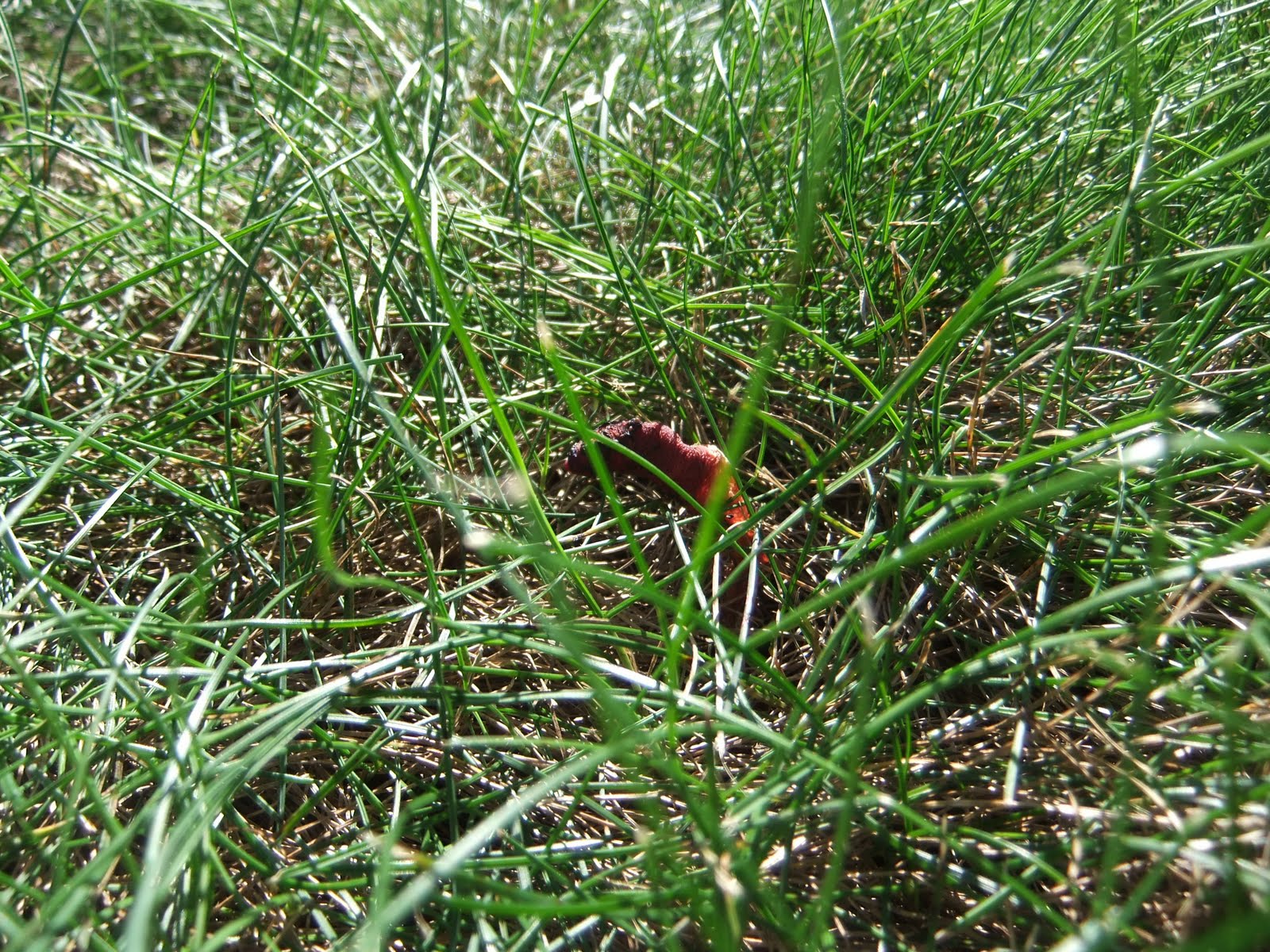
Bright orange fungi on a rotting log

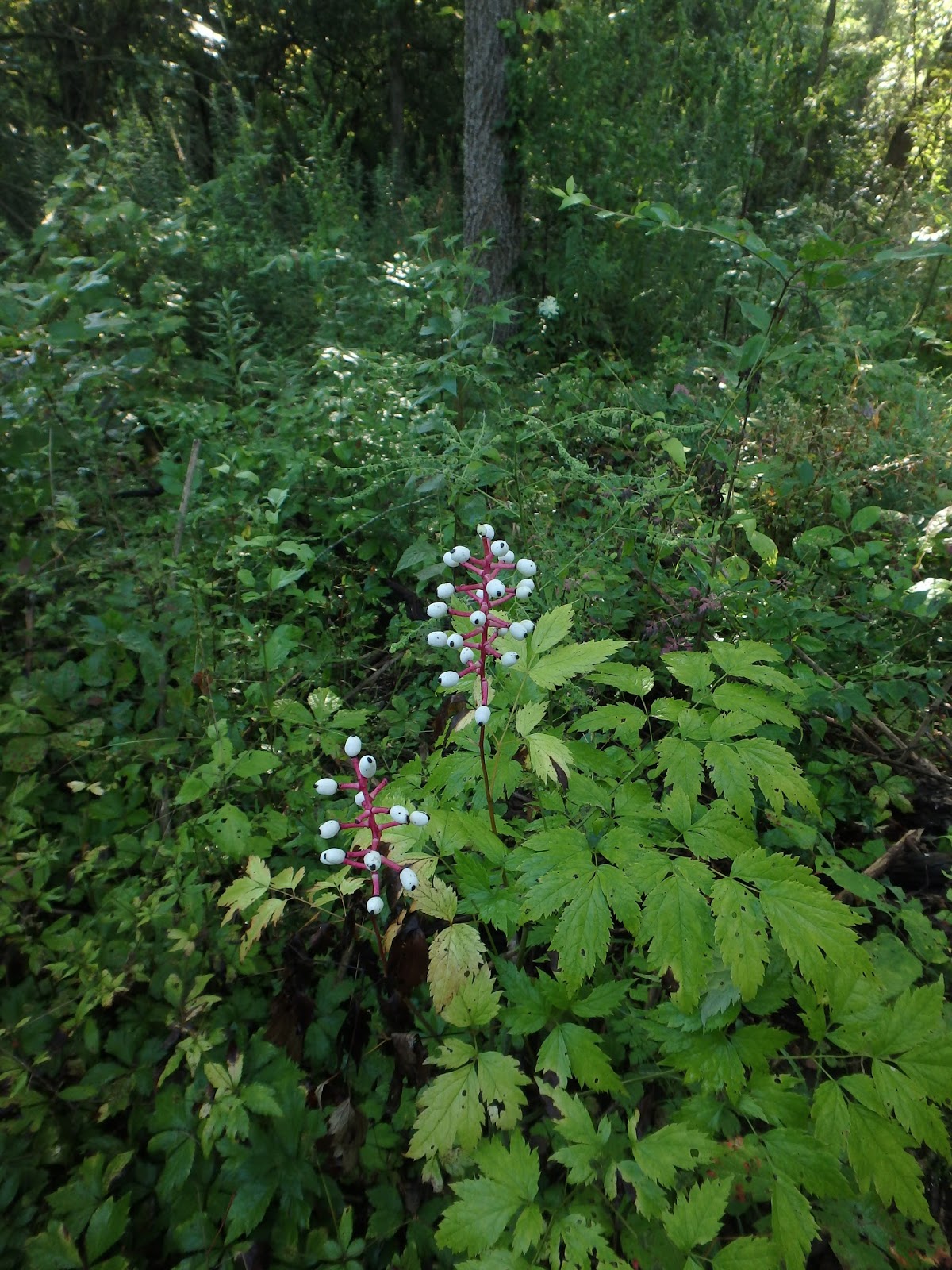
Doll's Eyes ( White Baneberry)  The fruit is far showier than the delicate flowers.

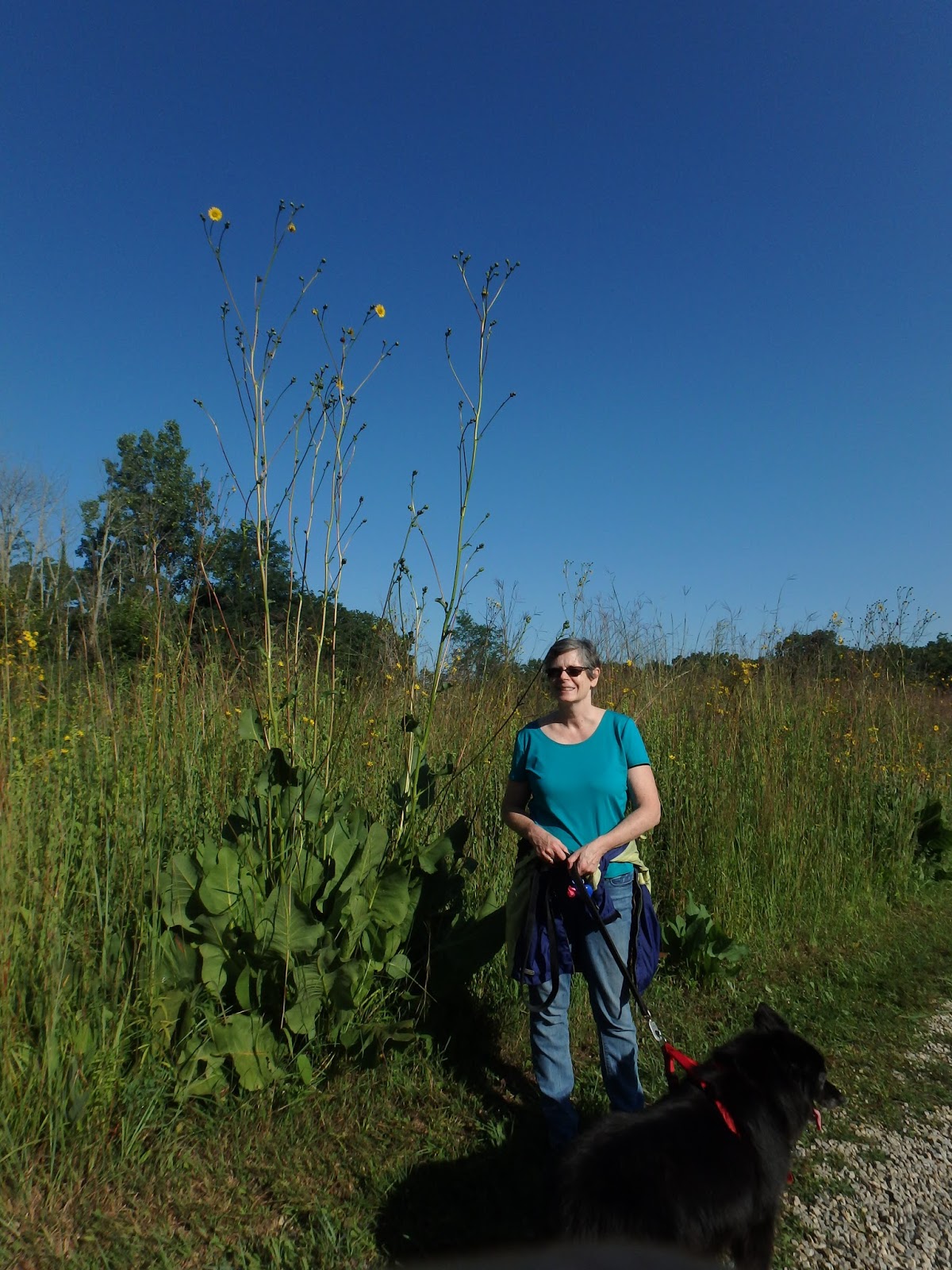
And an enormous Prairie Dock


Thursday, October 18, 2012

The Fungus Among Us Workshop

I was surprised to see that this is the first blog I have posted about Aullwood. I try to take one of their Adult Classes each year. This class was held October 13. Robb Clifford from the Darke County Parks was the instructor. His wife, Angie, helped him out. She knows a lot about fungi also.

After an introductory slide show, we headed out to find fungi. Here are a few that we found. I am using the common names as I remember them. I don't have a field guide to fungi although I ordered one online so I will have one soon. Robb recommended the National Audubon Society Field Guide to Mushrooms which he said was the one recommended by his professor at The Ohio State University.

                                Fresh Artist's Shelf

                              Bottom of Artist's Shelf.
                              This can be drawn on.

                           Robb called this Chicken Fat.  
                           The underside is bright yellow.

                              Dryad's Saddle.  
                              Supposedly wood nymphs sit on them
                              when they are tired from dancing.

                            Pear Puffballs, a small puffball.

                                       Shaggy Mane

                                  Turkey Tail

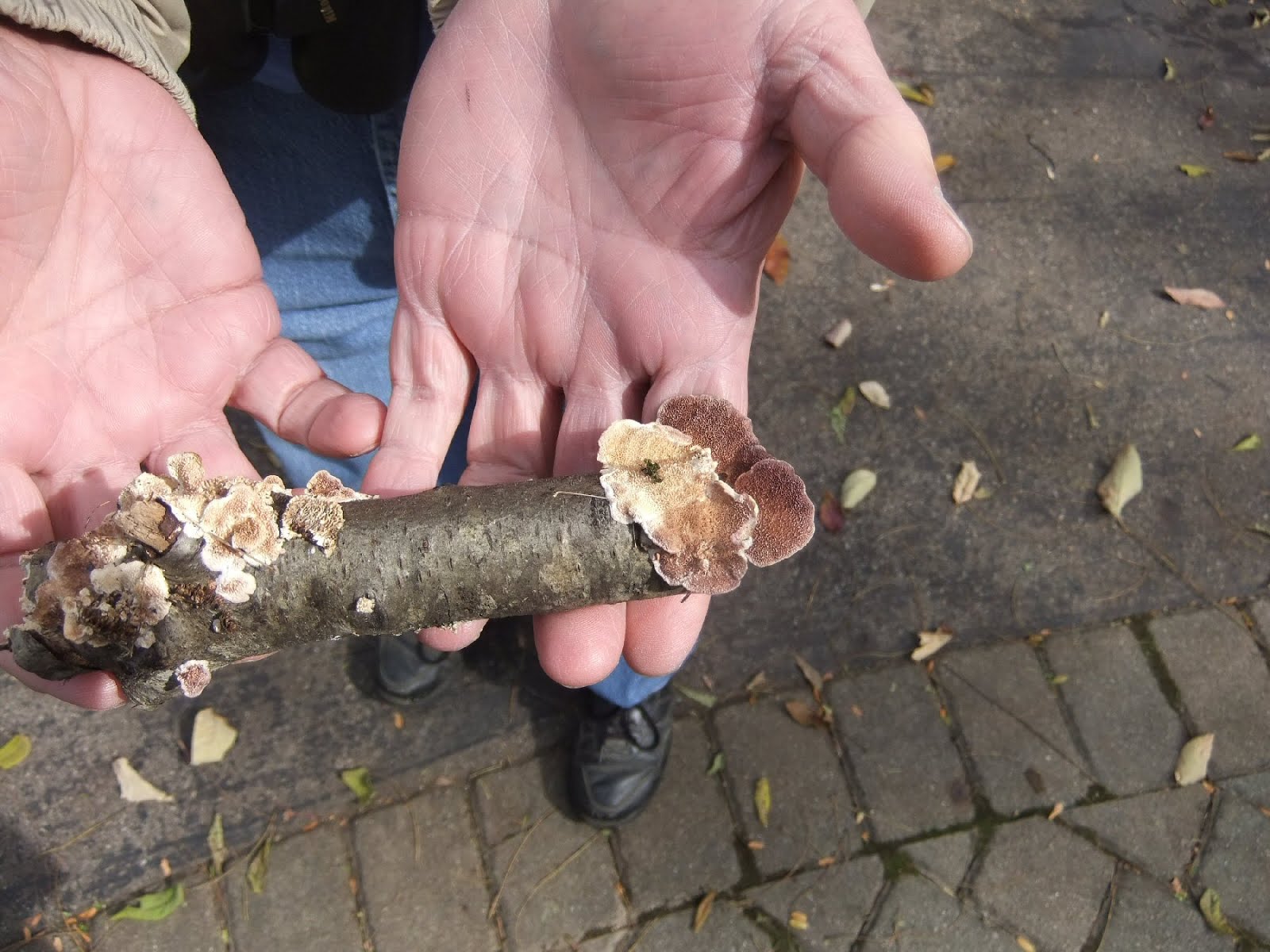
                                 Violet-toothed polypore.
                                 Toothed refers to the gill shape.

 
The edge of the bottom side is violet when fresh and gradually darkens as it ages. Robb and Angie told us lots of other facts about fungi but I'll save that for another day.

Friday, August 10, 2012

Busy Week

Last weekend was a busy week, this week has been busy as well and today we are expecting company for this weekend.  Here are a few photos from what has been happening but not much commentary.

We headed north on August 4 to attend a cousin's birthday party. We arrived in  northern Ohio early enough to take a quick driving tour of our three favorite birding areas beside Lake Erie.

At Ottawa National Wildlife Refuge, I made a bathroom stop and noted a flyer on the receptionist's desk describing the American Lotus. I had been calling all the flowers with the big leaves growing in the water waterlilies. But now I know American Lotus grows on stems that extends well above the water.

Tom took this photo from the van at Metzger Marsh.


We had a good time at the potluck birthday party but were chased back to our van by an approaching storm since we were sitting outside.

The next day we went to the annual Smith family reunion. I have a photo of me attending it when I was six years old. The reunion has been held at a variety of places...the farm of Lena and Charles Smith, and then the farms and homes of their children. For the last ten or twenty years it has been held at what most of us call "the Ratner cabin".

There is always a potluck dinner at noon. I didn't take a photo until most people had had dessert but you can see there is some left for the nibblers.


We old folks talk and talk and talk and look at photos from reunions of the past.


The children have fun, too.


The reunion was lightly attended this year, probably because there was rain all morning. Some years there are close to two hundred attending. This year there were more than fifty but less than a hundred. But as Helen pointed out, "When there aren't so many people here, we get to talk with each one more. When there are a lot of people here, we get to see and say "Hi" to a lot of people."

She also told me about this beautiful fungus on one of the trees. The fungi is close to the size of a soccer ball.


When we returned home I immediately started gathering supplies for a Children's Drawing session on Tuesday. Other artists in the area teach on Monday, Wednesday, and Thursday. There were seventeen or eighteen young students, ages almost six through nine. Here is one drawing from the drawing session. I'll put all of them up this coming Tuesday.


Thursday, October 20, 2011

Garbry Big Woods Sanctuary...October 10


October tenth was a beautiful day.  Tom decided it would be a good day to take video to turn into a treadmill video.  The treadmill videos are a set of DVDs that Tom is making so people walking on a treadmill can pretend they are taking a walk. People have discovered they exercise longer if they are "walking on a nature trail".


Here is Tom with the camera mount he rigged up. With this mount and his smoothly running scooter, he can get video that is steady.


Off he went down the trail. I followed after and here are some of the plants and other things I found.


This is White Snakeroot. If cows eat too much of this plant, they give tainted milk which can cause death. This caused the Milk Sickness that is believed to have killed Abraham Lincoln's mother.


Zig-zag Goldenrod. This is the goldenrod whose name I can remember. I always have to look up the other varieties in a field guide.


This seems to be a kind of Aster. I've always called it Woodland Aster but I don't find an aster by that name in my field guides.


I was surprised to find these. Puttyroot leaves are found throughout the winter but die and disappear before the flowers appear in mid May in our part of Ohio. It is in the orchid family.

Since finding the Giant Puffballs earlier this year and then the Dog Stinkhorn, I find myself looking for fungi. Here are some that I found.


Pretty little umbrellas.


These looked as though a woodland animal, perhaps a mouse, had been chewing on them.


These were tiny. If I hadn't been looking for fungi, I wouldn't have seen them.


I might have missed these, too. Below is a closer view.


There was no missing this one, a Giant Puffball. I was surprised it still looked fairly fresh. The ones at Charleston Falls have completely disappeared.


I found lots of evidence of leaf miners. The thought of tiny insect larvae so small they live between the top and bottom layers of leaves is mind boggling to me.


And Tom spotted this caterpillar. I wonder if it is some type of Tiger Moth.

Thursday, October 13, 2011

Stinkhorn Fungus

On Monday, October 4, I mowed the grass. On Tuesday, Tom found this in the front yard. I wondered if I had, fortunately, not run a mower wheel  over it or if it had grown there overnight.


I told Tom I thought it was a dog stinkhorn. I was fairly sure I had seen one other fungi like this. I have been learning from naturalists for over thirty years and I vaguely remembered a naturalist identifying it.

The drawing in my copy of Non-Flowering Plants, A Golden Guide, looked similar to the one in our yard, but not exactly like it. I supposed that, like most species in nature, there were a number of similar related species. Although the fungi is called stinkhorn, the write-up in the book said this species did not have a strong odor. My nose isn't as discriminating as it once was but from eighteen inches away, I didn't notice a smell. I decided to use the stinkhorn for this week's blog but I didn't start further research until tonight. (8 PM on Wednesday). I wish I had started on Tuesday. I might have found the egg-like structure these fungi sprout from. Instead I took photos of the fungi nearly every day, watching it grow more and more callused and shriveled


One day I saw small flies and an ant on the fungi. I wondered if they were feeding on it. Tonight, when I finally did some on-line research, I learned that the stinkhorns attract insects with the spore-soaked slime with which they cover themselves. The insects carry off the spores which can then produce another stinkhorn somewhere else.

I also learned that the stinkhorns grow in just a few hours so the stinkhorn had appeared since I had mowed on Monday.

Two sources I consulted were MushroomExpert.Com and America's COOLEST Mushrooms - AmericanMushrooms.com.  Both have a lot of additional interesting information about the stinkhorns.

Thursday, October 6, 2011

The Giant Puffball Mushroom, Calvatia gigantea


On Saturday, September twenty fifth, my friend, the Fungi Finder, and I went for a walk at Charleston Falls. We saw lots of Giant Puffballs off the trail as well as many destroyed puffballs along the trail.


We debated what the reason might be for the destroyed puffballs.

On Sunday, Tom and I went to Charleston Falls again. I wanted to count puffballs and I wanted Tom to see I wasn't exaggerating about the number in the woods. He took his Canon EOS.

He was impressed with the first patch of seven large puffballs, some nearly as large as soccer balls and many bigger than softballs. We saw Dan, one of the rangers, a little further up the trail. The three of us had an interesting discussion about the puffballs and other fungi. He said he knows people who eat the giant puffballs but he doesn't. He says he is wary of eating wild mushrooms.

There is an old saying, "There are old mushroom hunters, and bold mushroom hunters, but there are no old, bold mushroom hunters." The poisonous mushrooms look very much like the edible ones. And among the puffballs, as with the other groups, there are poisonous mushrooms.

He said that a visitor or visitors to the park had destroyed the ones along the trail. It always makes me sad to hear that someone has destroyed a natural living thing just for the sake of destroying it. Mushrooms have an important place in nature. Some are important as decay organisms. They break down logs, leaves, and other organic debris into essential nutrients which are returned to the soil. Some are beneficial to the trees they grow near. They have a special relationship with the tree roots, providing minerals and water to the tree in exchange for glucose.

Dan told us there was a nice patch of puffballs a few steps further up the trail past the main turnoff which most hikers use. After we left him we took the lesser traveled trail and found these three quite close to the trail.


A few steps further, we found these two even closer.


Tom took the photo below to show the size compared to my hand. I wear a Ladies "Large" in gloves so my hand is not dainty. Giant puffballs can range in size from baseball size to beach ball size. Many are soccer ball size.


This mushroom was already a bit past its prime. It wasn't the beautiful pure white of the one I photographed on Saturday with my keyring beside it for a size comparison.

After Tom took this photo he went back the way we had come and I went forward, retracing the route the Fungi Finder and I took on Saturday, counting puffballs as I went. Even walking rapidly, I counted seventeen off in the woods and nine destroyed ones along the trail. Tom found eleven after he left me. That gave us a grand total of twenty eight puffballs.

Tom and I went back on October fourth for another look at the two puffball close to the trail. This time they looked like this. They could almost be mistaken for rocks.